Marion Ruthven–Harry Powell
Young Captain Jack · The Son of a SoldierMarion Ruthven–Harry Powell is the novel’s principal romantic relationship, joining Marion’s steadfast affection to Harry Powell’s courage, professional duty, and tenderness amid the violence of the American Civil War. Their eventual marriage is not an isolated happy ending: it confirms a moral contrast repeatedly drawn between Harry’s bravery and St. John Ruthven’s cowardice, while placing Marion’s future within the restored household formed after the war.
Identity and Emotional Foundation
Marion Ruthven is a seventeen-year-old young woman living at the Ruthven plantation with her widowed mother and her adopted brother, Jack Ruthven. The family has been shaken by the death of Colonel Martin Ruthven at the Battle of Gettysburg, and Mrs. Ruthven’s resulting illness leaves the household marked by bereavement and vulnerability. Within that setting, Marion and Harry are relatives: Harry is described as her dashing cousin and is also a young surgeon. Their connection therefore begins inside an established family and wartime community rather than through a socially detached courtship.
The evidence presents Marion’s feelings before either character makes a formal declaration. When Federal troops approach and the Confederate army is forced to retreat, she recognizes that a military defeat may nevertheless bring Harry back into her presence. Her private comparison is decisive: she regards Harry as a man of courage and contrasts him with the cowardly St. John Ruthven. She also prays that Harry will survive the war unharmed. Affection here is inseparable from moral judgment; Marion is drawn not merely to Harry’s appearance or social position, but to the qualities his conduct reveals under danger.
Wartime Encounters and Reciprocal Care
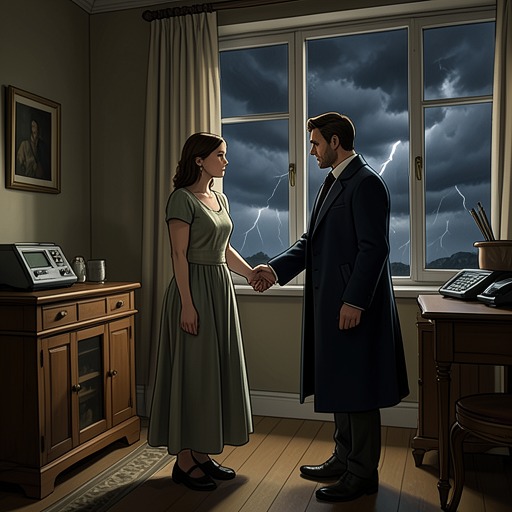
Marion’s hope is fulfilled when Harry Powell rides to the plantation early in the morning. He explains that he could not stay away after hearing that the fighting in the neighborhood had been fierce and that he wanted to learn whether the Ruthven household had suffered. His visit is therefore an act of personal concern placed within the practical language of wartime news and medical responsibility. The plantation has been exposed to combat: a cannonball has passed through the sitting room, and a wounded soldier is suffering from a high fever.
Harry’s response makes his attachment visible. On learning that the cannonball did not strike Mrs. Ruthven or Marion, he gives thanks for their safety and looks at Marion in a way that makes her blush deeply. The narrative uses this small physical reaction instead of an elaborate declaration: his relief and her embarrassment establish mutual feeling through gesture. Marion then tells Harry that she is glad he escaped injury, and her look conveys more than the words themselves. The relationship’s emotional language is thus reciprocal but restrained, expressed through concern, blushes, and meaningful glances in a household where danger has made every reunion uncertain.
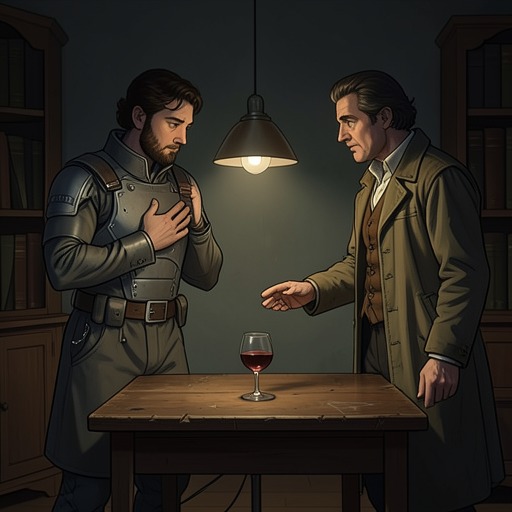
Harry is not untouched by the fighting. He admits that he has been in peril and has been wounded in the shoulder, though he considers the injury minor. Marion’s immediate response is relief that he survived. The same conversation turns to Colonel Stanton, who has been shot through the breast and lies between life and death, reminding both lovers that their happiness is surrounded by mortal risk. Harry’s courage is consequently not abstract: he is a surgeon moving through battle conditions, returning to the plantation despite danger, and carrying a wound of his own.
Contrast with St. John Ruthven
Marion’s attachment to Harry is sharpened by her contempt for St. John Ruthven. St. John is a young planter whose inherited plantation and money have been nearly consumed by reckless spending and neglect. His estate deteriorates while he devotes himself to personal appearance and horseback riding, and his financial anxiety becomes entangled with the prospect that Mrs. Ruthven may leave half the property to Jack. This material background gives his cowardice an economic counterpart: he seeks security through inheritance while failing to sustain the property already in his possession.
Harry, by contrast, is represented through service and exposure. He comes to the Ruthven plantation to inquire about its safety, works as a surgeon, enters danger, and accepts a shoulder wound without dramatizing it. Marion’s inward verdict that Harry is a man compared with St. John establishes the relationship as a choice between opposed models of masculinity. The contrast also gives the romance a plot function: Harry’s worth becomes legible through conduct, while St. John’s failures make clear why Marion cannot regard him as a suitable alternative.
The Relationship within the Identity Plot
The romance unfolds alongside Jack Ruthven’s uncertain parentage and the struggle to determine who he really is. Marion explains that Jack is not her biological brother but was adopted by her parents about ten years earlier; nevertheless, she insists that he is her real brother in the eyes of the law. This distinction between biological and legal kinship matters to her relationship with Harry because the household’s emotional bonds are repeatedly tested by competing claims about blood, marriage, and inheritance.
The mystery reaches outward through the wreck on Hemlock Bluff. Marion recounts that Jack had been a passenger on the boat when it came ashore between ten and eleven years earlier. Evidence associated with the shipwreck includes the clothing of Jack and his mother, an unmarked lace handkerchief, a ring whose worn inscription could not be deciphered even by two jewelers, and a heavy black-painted tin box recovered from the wreck of the Nautilus. Dr. Mackey later claims Jack as his son, while Colonel Stanton, feverish after being shot, cries out about a shipwreck and asks that his wife Laura and his son Jack be saved. Harry’s presence in the family drama is therefore connected to a world in which love must coexist with disputed identity and uncertain evidence.
Harry also participates in the emotional aftermath of Colonel Stanton’s injury. His report that the colonel is near death brings the question of Jack’s parentage into the Ruthven household, and the colonel asks to see the clothing and jewelry belonging to the shipwrecked woman and the child. The romance is not resolved by ignoring these conflicts; instead, Marion and Harry’s union emerges while the family’s legal and biological structure is being reconstructed through testimony and recovered objects.
Marriage and Aftermath
The relationship reaches its formal conclusion in a double wedding. After the Civil War ends, Colonel Stanton resigns from the army, prosecutes Dr. Mackey, and helps recover a fortune worth one hundred and fifteen thousand dollars for himself and Jack. The recovered tin box and its contents, found in the outlaws’ camp among goods stolen from a trader and other valuables, provide the material link to that restoration. These consequences stabilize the household in which Marion and Harry’s marriage will take place.
Colonel Stanton marries the widow Mrs. Ruthven, who thereby becomes Mrs. Stanton and once again serves as Jack’s mother. At the same ceremony, Marion gives her heart to Dr. Harry Powell, who has established a lucrative medical practice in Philadelphia. The wedding is described as a grand affair and becomes the talk of the neighborhood for a long time. Its doubleness is meaningful: one marriage repairs a bereaved household and reunites Jack with his biological father’s family, while the other fulfills Marion’s attachment to the courageous physician whose conduct she has admired throughout the war.
Their ending is therefore a stable marriage rather than a merely provisional courtship. Harry’s professional future in Philadelphia and Marion’s union with him place their relationship beyond the immediate battlefield, while the continued family arrangement at the plantation preserves the domestic bonds that have shaped Marion’s life. The novel closes their romance within a broader pattern of recovery: war ends, the stolen fortune is restored, the false claims surrounding Jack are punished or disproved, and the family’s future is reorganized through marriage, adoption, and acknowledged parentage.